Rico Colorado Summer 2026: What's Changing in Town
July 9, 2026
July 9, 2026
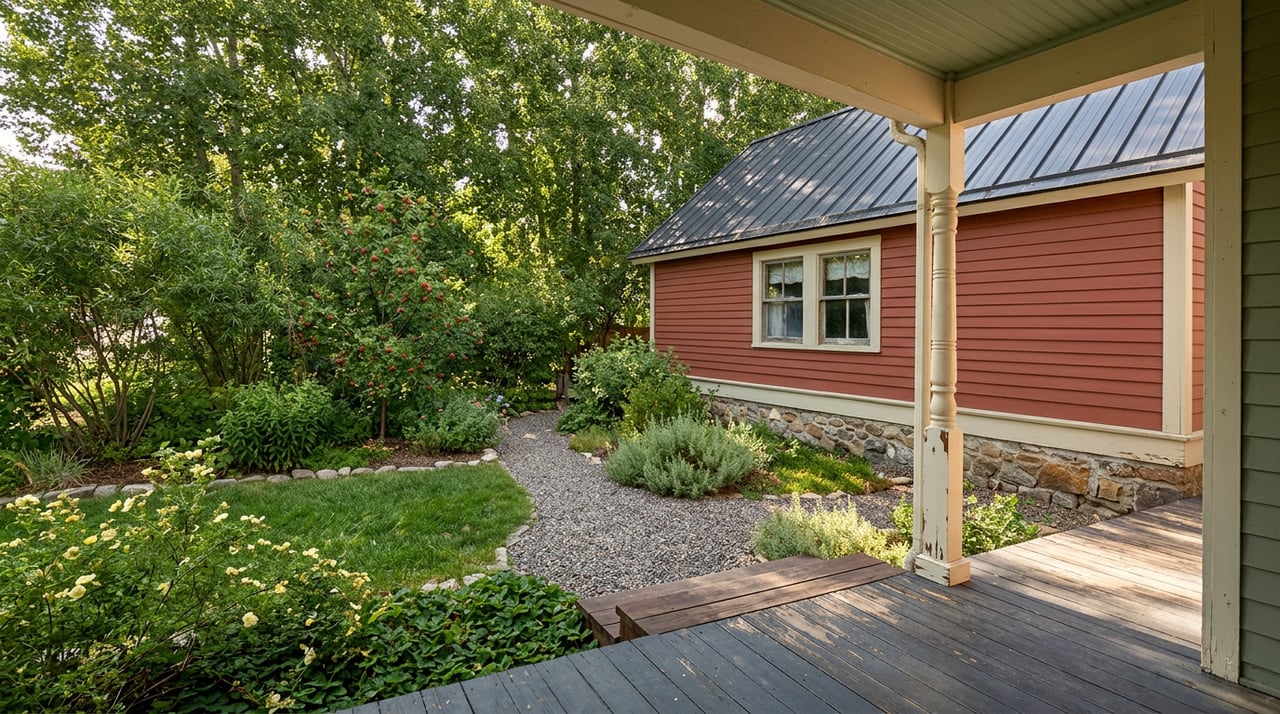
Drive south from Lizard Head Pass on a July afternoon and Rico still looks the way it has for a decade. The Enterprise sign, the post office, the Dey Building on the National Register, the sweeping deck outside Fireweed catching late sun off Glasgow Avenue. What's changed this summer isn't the streetscape. It's two specific pieces of news that, taken together, start to answer a question people who own here have been asking for years: is Rico going to keep being a place travelers drive through, or is it becoming a place that stands on its own terms?
The short answer, based on what's happened since March, is the second one. And the mechanism is smaller than you'd expect.
The Colorado Parks and Wildlife Commission approved a Rico Trails Alliance funding request for the Rio Grande Southern River Trail bridge at its March 4–5, 2026 meeting in Westminster, and RTA received the grant. That's the headline. The reason it matters is buried in the trail geometry.
The RGS River Trail follows the abandoned Rio Grande Southern railroad grade for 4.7 miles from the Town of Rico south to the Montezuma/Dolores County line. Much of it is already built. The last critical piece is a new bridge across the Dolores River, at the location where the historic RGS Bridge 68A once stood. Once the bridge exists, the trail connects all the way through, delivering hikers, bikers, trail runners, hunters and anglers to the Ryman Creek and Salt Creek trailheads, which both extend up to the Colorado Trail.
Here's what that looks like on the ground for someone who lives on Silver Creek or up above the river.
| Today | Once the RGS bridge is in |
|---|---|
| Ride Highway 145 shoulder to reach Ryman Creek or Salt Creek | Roll out of town on a gentle railroad grade, cross the river, keep going |
| Access to the Colorado Trail from Rico requires either shoulder mileage or a steep, technical climb | Family-friendly grade suitable for kids, beginners, and older riders |
| No groomed nordic option nearby | The only non-motorized recreational trail accessible to families with young children, beginners, and a more mature population, groomed in winter |
RTA's stated goal is to raise $319,000 to construct the bridge and the two remaining northern sections of trail in 2026/27. With the CPW grant now in hand, that number is closer than it was in January.
The trail also has a second job that gets less attention. The corridor showcases Rico's mining past, featuring old railroad ties, telegraph poles, and charcoal kilns. Which means the same infrastructure that removes 4.7 miles of highway riding also gives residents a way to walk their kids past artifacts of the 1880s boom without ever getting in a car. That's a real change in what living here means, not a marketing line.
For context on what the connection opens up: Blackhawk Pass, the section of the Colorado Trail that runs by Rico, totals just over 25 miles and gains more than 4,000 feet of elevation. The views and solitude are worth it. The Calico trail nearby offers an 11-mile loop through meadows, rivers, and spruce forest. None of that is new. What's new is a soft, low-grade route to reach it from town without playing chicken with Highway 145 traffic.
The other quiet story this year is on Glasgow Avenue.
Emily Thorn's path to Fireweed, the Rico café and mercantile that she purchased from founder/owners Chelsey Rajavuori and Matt Guertin in March, took a little while. Ownership changes at small mountain cafés usually go one of two ways. Either the character survives the handoff or it doesn't. Six months in, the signals are pointing the right way.
The menu still leans into the founders' template. Coffee, tea, smoothies, and the mushroom-herb add-in that regulars have been ordering since the place opened. The extensive menu still runs on wholesome, organic offerings including homemade-bread sandwiches, smoothies, and coffee, with the Forest Mushroom Latte and Road Hana smoothie among the signature drinks.
If you haven't been in recently, it's worth knowing that hours have tightened compared with the pre-transition version. Fireweed is now generally open Monday and Wednesday through Sunday, closed Tuesdays, from 8 a.m. to around 3 or 4 p.m. That's a shorter day than the original 2021 schedule, which ran into the evenings on weekdays. For anyone treating Fireweed as their default lunch spot, plan accordingly.
The reason to pay attention to a café ownership change in a town of fewer than 300 residents is simple. When there are five or six commercial doors on your main street, each one carries disproportionate weight. A soft handoff means the deck stays lively on summer afternoons. A hard handoff would have meant a dark building across from the post office. That didn't happen.
For anyone who's had out-of-town family drop in this summer and needed to answer the "so what's here?" question without defaulting to "we can drive to Telluride," a quick current-state map:
That's a working small-town commercial district. Not a resort strip, not a ghost town, and considerably denser than most Colorado places with Rico's population count.
Here's the piece worth sitting with.
Rico has always been described in the same shorthand. A town of roughly 300 residents that functions as a thoroughfare for road-tripping tourists passing from the Southwest to Telluride and the Colorado Rockies. The word "thoroughfare" is the tell. It means the town's economic identity has been defined by people who don't stop, or who stop for twenty minutes.
Both of this year's news items push against that. A café ownership handoff that preserves rather than resets the anchor tenant on Glasgow. A trail project that gives residents and second-home owners a reason to be in town on a Saturday morning that has nothing to do with driving somewhere else. Neither is a headline-grabber on its own. Together they're a thesis: Rico is quietly building the amenities of a town you stay in, not one you pass through.
That matters for anyone who owns here, and it matters differently depending on why you own. If Rico is your primary home, the RGS Trail is going to change your morning routine. If it's a second home, the trail is going to change what your guests do when they visit, which changes how often they want to visit. If you're watching Rico from the outside as a market, the relevant signal is that the town is adding permanent, non-motorized infrastructure that raises the floor on what daily life here offers. That floor moves slowly. It has moved this year.
The other thing to hold onto: Rico sits at an elevation of 8,825 feet in Dolores County, with a population of 172 residents as of 2020, which means every one of these small changes is felt at a scale that a resort town simply doesn't feel them. A new owner at Fireweed is a real event. A bridge is a real event. The math of a small town amplifies both.
Come the first week of August, walk out to where the old RGS Bridge 68A once crossed the river. Stand on the west bank. Then walk into Fireweed and order the coffee you always order. Both places tell you something about where Rico is headed that no market report will.
If you're thinking about what ownership in Rico or the broader Dolores corridor looks like right now, or you'd like a candid read on how the trail work and the small-business shifts affect specific streets and specific properties, Eric Saunders is happy to talk. Let's Connect.
August 6, 2026
Local Knowledge & Lifestyle
Eric Saunders | July 28, 2026
Buying
Eric Saunders | July 28, 2026
Buying
Eric Saunders | July 28, 2026
Real Estate Education & Tips
July 28, 2026
Real Estate Education & Tips
Eric Saunders | July 28, 2026
Selling
Eric Saunders | July 28, 2026
Local Knowledge & Lifestyle
Eric Saunders | July 28, 2026
Eric Saunders | July 27, 2026
Find Mountain Village Ski Condos and Resort Living in Telluride.
Eric loves to help people discover the mountain lifestyle and magic of Telluride. He brings a high level of professionalism and integrity to each transaction; allowing you to relax and enjoy the buying/selling process. He has been involved in over $400 million in real estate transactions and has guided clients through large-scale and single-family developments, condo, commercial and land purchases.