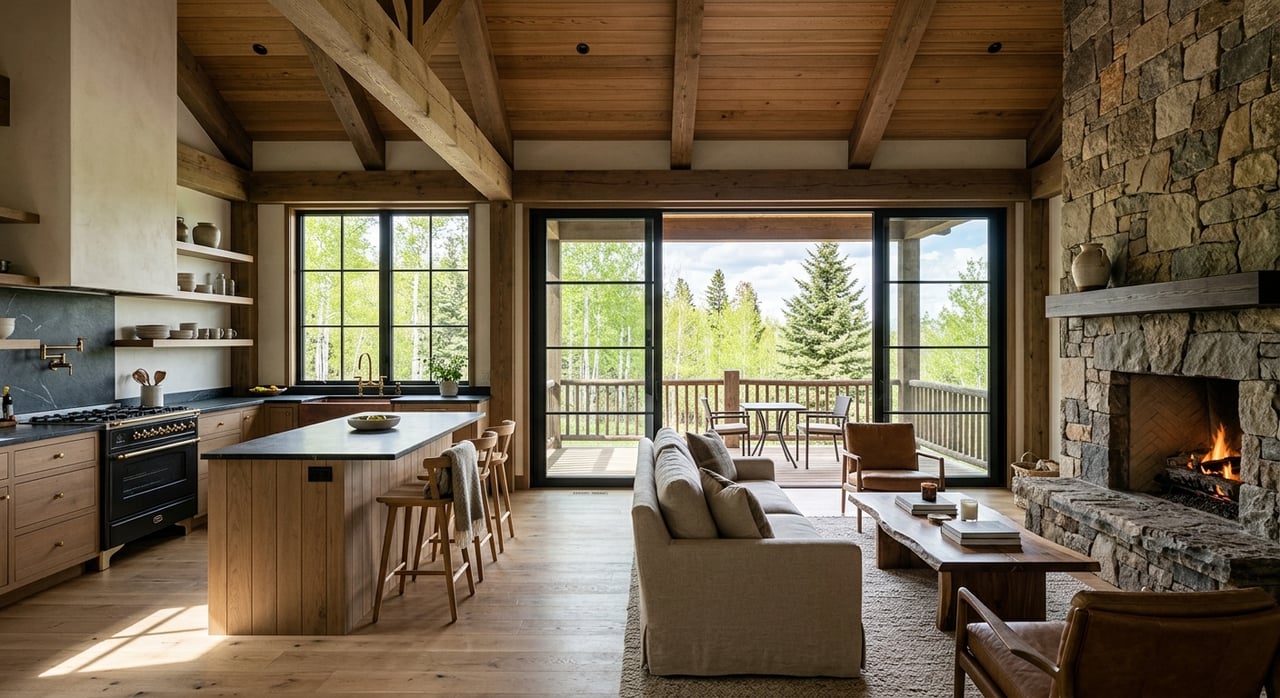
Ridgway or Ouray Homes & Lifestyle: Which Fits You?
June 18, 2026
June 18, 2026
Trying to choose between Ridgway and Ouray as your San Juan mountain base? It is a smart question, especially if you want easy access to Telluride while still finding the right day-to-day fit. The two towns are close in spirit but quite different in how they live, drive, and feel over the course of a full year. This guide will help you compare commute patterns, housing character, amenities, and lifestyle so you can narrow down which base fits you best. Let’s dive in.
Ridgway and Ouray are both small towns in Ouray County, but they offer different experiences. County planning data estimates Ridgway at 1,093 residents in 2022 and Ouray at 1,007. Ridgway covers about 1.9 square miles at 6,962 feet, while Ouray covers about 0.9 square miles at 7,687 feet.
That difference matters in practical ways. Ridgway feels a bit more spread out and functionally connected, while Ouray feels tighter and more vertical in its mountain setting. If you are deciding where to buy, that everyday rhythm can matter just as much as the view.
For many buyers in this part of Colorado, road access is one of the biggest decision points. Both towns are road-dependent, and both connect to the region through U.S. Highway 550. Ridgway also sits at the crossroads of Highway 550 and State Highway 62, which gives it a more central position for regional travel.
Ridgway is about 45 minutes from Telluride and 27 miles north of Montrose by road. Visit Telluride also places Ridgway about 38 miles northwest of Telluride. For buyers who expect regular trips to Telluride or frequent airport runs, that can make Ridgway the more practical base.
Ouray is about 47 miles from Telluride, or roughly 1 hour, and about 37 miles or 45 minutes from Montrose. Those are still manageable drives, but they often feel a bit more destination-oriented. If you value a smaller mountain setting and do not mind slightly longer routine drives, Ouray can still be a strong fit.
If Telluride is a regular part of your week, Ridgway usually offers the easier pattern. Its location supports more direct movement between Telluride, Montrose, and surrounding recreation areas. That can matter if you are balancing remote work, airport travel, property visits, or multi-home ownership.
Ouray works well when the base itself is part of the appeal. If you want to arrive, settle in, and enjoy a more concentrated mountain-town setting, the extra drive may feel well worth it. The right choice depends on how often you expect to be on the road.
Seasonality is part of mountain ownership, and it is worth weighing carefully. Ouray’s travel identity is closely tied to the Million Dollar Highway, the section of U.S. 550 between Silverton and Ouray. City travel guidance notes that winter roads can be slick and that chains may be needed over Red Mountain Pass in poor weather.
The city community plan also notes that Red Mountain Pass closures due to avalanche, rockfall, or accidents can frequently cut off highway access to the south. That does not make Ouray inaccessible, but it does reinforce that winter driving conditions are a real lifestyle factor. Buyers who want fewer weather-sensitive driving variables often lean toward Ridgway.
Ridgway is not immune to winter weather, of course. But based on the available local planning and visitor information, it reads as the less road-sensitive choice for year-round regional access. If convenience and predictability matter most, that may carry real weight in your decision.
The housing data shows one of the clearest differences between the two towns. In Ouray, 57.5 percent of housing units are occupied and 42.5 percent are vacant. In Ridgway, 87.7 percent are occupied and 12.3 percent are vacant.
That gap suggests very different housing patterns. County planning materials note that the county’s high vacancy rate is likely tied to second homes and short-term vacation rentals. In practical terms, Ouray appears to have a more seasonal housing mix, while Ridgway appears more consistently lived-in year round.
The occupancy mix also varies. In Ouray, 73.4 percent of occupied units are owner-occupied and 26.6 percent are renter-occupied. In Ridgway, 53.2 percent are owner-occupied and 46.8 percent are renter-occupied.
That points to Ridgway having a broader tenure mix, which often supports a more everyday residential feel. Ouray, by comparison, appears more weighted toward ownership within its occupied stock, alongside a larger share of vacant units overall. For buyers comparing community rhythm, that distinction can be useful.
Ouray also has older housing stock on paper. Homes built before 1970 account for 38.5 percent of housing there, compared with 26.5 percent in Ridgway. Ridgway has the higher share of mobile homes at 11.9 percent.
Taken together, the public data suggests that Ouray is the older, more seasonal market, while Ridgway is the more year-round and tenure-mixed option. That is not a value judgment. It is simply a helpful way to frame how each town may align with your priorities.
Ridgway stands out for daily-life convenience. Local visitor materials present the town as a hub for outdoor adventure, arts, culture, and wellness, but they also point to practical services that matter when you are actually living there.
The walking map and local guides list medical services, gas, EV charging, a post office, public restrooms, RV parking, mechanics, parks, markets, and hardware stores. You also see hot springs and spas, yoga and meditation, a farmers market, and locally owned shopping and dining. For many buyers, that blend of services and recreation supports a smoother full-time or extended-stay lifestyle.
Ridgway State Park is one of the town’s strongest public amenities. Colorado Parks and Wildlife says the park spans 3,301 acres and includes 282 campsites, 87 picnic sites, and 15.6 miles of trails. Public information also highlights boating, fishing, swimming, biking, a visitor center, and barrier-free access across several facilities.
That kind of amenity matters because it is not just scenic. It adds a year-round recreation base with broad access and a variety of uses. If you want a mountain home that supports active use beyond ski season, Ridgway has a strong case.
Ouray’s amenity set feels more compact and visitor-centered. Local materials highlight the city-run Ouray Hot Springs Pool, Box Cañon Falls, the Uncompahgre River Walk, city parks, restaurants, shopping, and the visitors center. There is also a free in-town shuttle that runs daily on a 45-minute loop from June through mid-September and connects downtown, trailheads, lodging, and visitor sites.
The Ouray Hot Springs Pool is described as sulfur-free and family-friendly, with multiple pools and soaking areas. If wellness, scenery, and a tighter town experience are high on your list, these features are part of what makes Ouray so appealing. The town offers a more immersive mountain setting, with many attractions gathered close together.
Visit Telluride describes Ouray as a National Historic District since 1983. It also highlights Box Canyon Falls, the hot springs pool, and the seasonal 4WD connection to Telluride via Imogene Pass and Tomboy Road in mid-summer and fall.
That creates a different ownership proposition. Ouray may appeal more if you want a base with strong visual character, historic setting, and a built-in sense of destination. It can feel less like a service hub and more like a mountain retreat with signature scenery.
If you are comparing Ridgway and Ouray seriously, the best answer usually comes down to how you want to live between outings, not just during them. Both towns put you in the San Juan Mountains. The difference is in the rhythm of access, housing, and daily convenience.
If possible, spend time in both towns on an ordinary day, not just a peak visitor weekend. Drive the routes you expect to use, note how long key errands take, and think about whether you want your base to feel more practical or more immersive. In this part of the market, small differences in access and town function can shape your ownership experience in a big way.
For many Telluride-minded buyers, the simplest neutral summary is this: Ridgway is usually the more practical everyday base, while Ouray is usually the more scenic and concentrated mountain-town experience. Both can work well. The better choice depends on how often you plan to drive to Telluride, Montrose, and surrounding recreation areas, and what kind of mountain living you want when you get home.
If you are weighing Ridgway, Ouray, or another San Juan market, working with someone who understands the nuances of these connected mountain communities can save time and sharpen your decision. To talk through your goals and compare options in a practical way, connect with Eric Saunders.
August 6, 2026
Local Knowledge & Lifestyle
Eric Saunders | July 28, 2026
Buying
Eric Saunders | July 28, 2026
Buying
Eric Saunders | July 28, 2026
Real Estate Education & Tips
July 28, 2026
Real Estate Education & Tips
Eric Saunders | July 28, 2026
Selling
Eric Saunders | July 28, 2026
Local Knowledge & Lifestyle
Eric Saunders | July 28, 2026
Eric Saunders | July 27, 2026
Find Mountain Village Ski Condos and Resort Living in Telluride.
Eric loves to help people discover the mountain lifestyle and magic of Telluride. He brings a high level of professionalism and integrity to each transaction; allowing you to relax and enjoy the buying/selling process. He has been involved in over $400 million in real estate transactions and has guided clients through large-scale and single-family developments, condo, commercial and land purchases.